

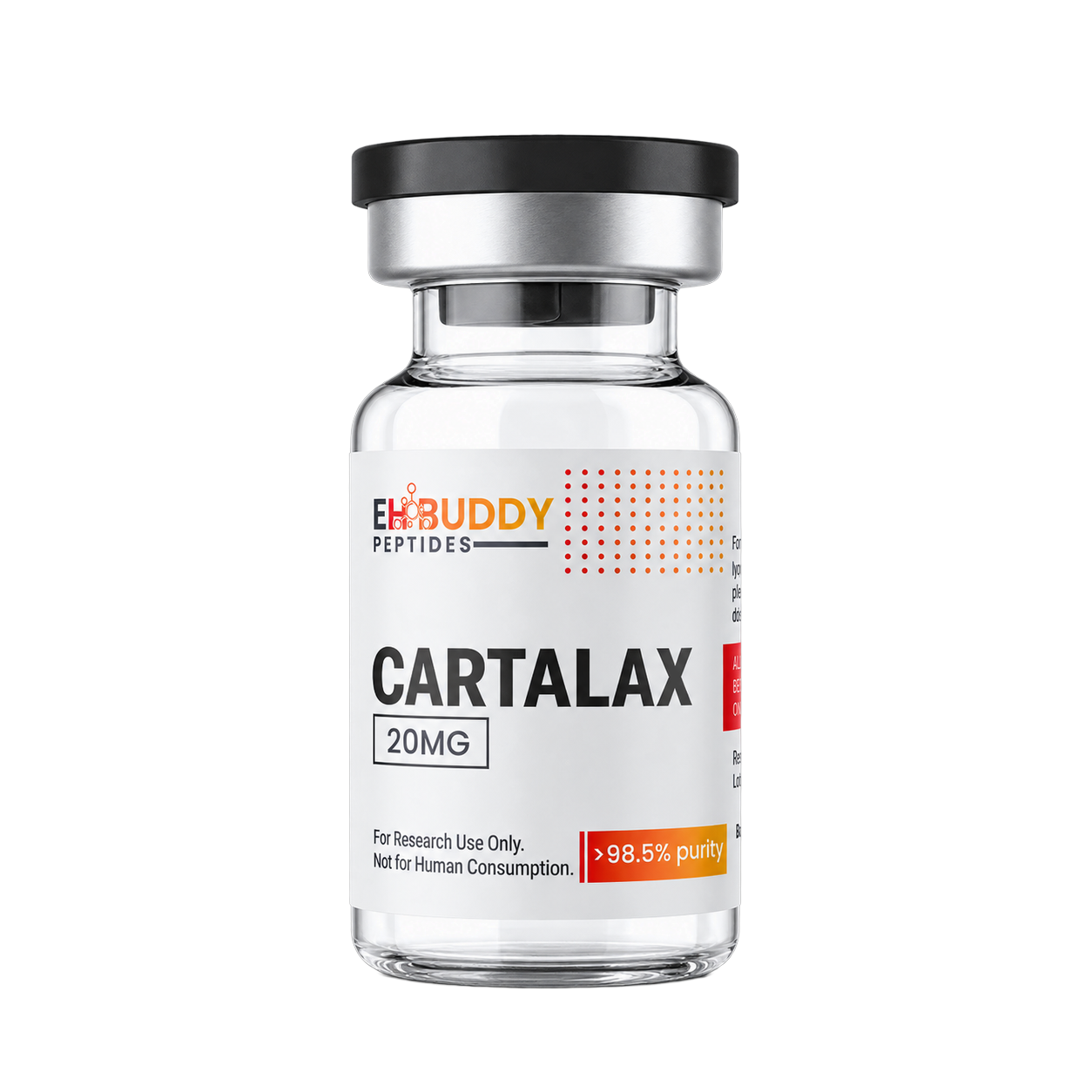
Cartalax — Cartilage & Connective-Tissue Peptide Bioregulator
Cartalax is a short synthetic peptide bioregulator most commonly described as the tripeptide Ala-Glu-Asp (AED); some suppliers market an Ala-Glu-Asp-Leu (AEDL) tetrapeptide under the same name. Part of the Khavinson family, it is researched for tissue-specific regulation of chondrocyte and connective-tissue gene expression.
Mechanism of Action
As an ultrashort peptide bioregulator of the Khavinson class, Cartalax is studied for a non-receptor, epigenetic-style mechanism. The peptide is small enough to be proposed to cross the cell and nuclear membranes and interact directly with DNA and chromatin, modulating the tissue-specific expression of genes associated with chondrocytes and connective tissue. This differs fundamentally from receptor-signaling peptides — the proposed activity is regulation of transcription rather than activation of a cell-surface receptor. Evidence is preclinical (cell-culture and animal models) from the originating research program.
Available Formats
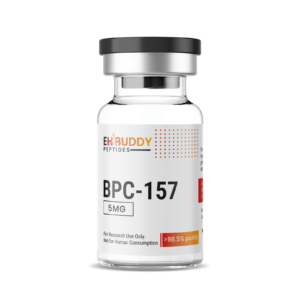
- 20mg
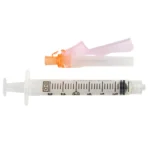
Reconstitution: Reconstitute with Bacteriostatic Water (BAC Water) for multi-use stability, or Sterile Water for single-use protocols. Store lyophilized vials refrigerated at 2–8°C, protected from light.
Key Research Areas
🔬 Chondrocyte & Matrix Gene Expression
Studied in cell culture for effects on cartilage matrix genes, including type II collagen and proteoglycans such as aggrecan.
⏳ Cartilage & Joint Aging
Examined in animal models of cartilage degeneration and osteoarticular aging.
⏳ Cellular Aging
The AED peptide appears across gene-expression and aging studies in multiple cell types (fibroblasts, mesenchymal and neuronal stem cells).
🩹 Connective-Tissue Inflammation
Investigated for inflammatory-signaling markers in tendon, ligament and intervertebral-disc research contexts.
FOR RESEARCH USE ONLY (RUO). This product is not a drug, food, or cosmetic and is not approved for human or veterinary use. All statements describe proposed or preclinical research findings only. Intended strictly for in vitro and laboratory research by qualified professionals. EhBuddy Peptides assumes no liability for misuse.



Reviews
There are no reviews yet.